


French Bulldog Puppy Care Guide for Beginners
Table of Contents
Preparing Your Home for a French Bulldog Puppy
French Bulldog Puppy Feeding Schedule and Nutrition
Choosing Healthy Food
Feeding Amounts and Frequency
French Bulldog Puppy Potty Training Essentials
House-Training and Crate Training
Establishing a Routine
French Bulldog Puppy Socialization and Training
Early Socialization Window
Basic Training and Behavior
French Bulldog Puppy Supplies Checklist
Exercise, Grooming, and Health Care for Your Puppy
Daily Exercise and Activity
Grooming and Skin Care
Breathing and Heat Sensitivity
Veterinary Check-ups and Preventive Care
Common Mistakes to Avoid
Frequently Asked Questions
Last Updated: October 11, 2026
Preparing Your Home for a French Bulldog Puppy
Bringing a French Bulldog puppy home is exciting, but success starts before your new companion arrives. A French Bulldog puppy care guide for beginners should emphasize preparation as the foundation for a smooth transition.
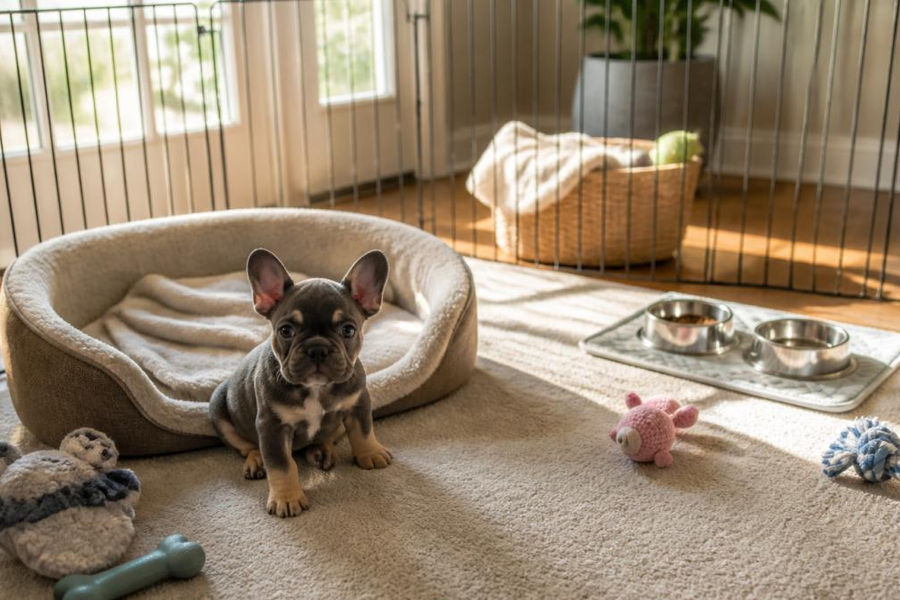
Start by designating a specific area where your puppy will spend time. This space should include a comfortable bed, water and food bowls, and age-appropriate toys. French Bulldogs are social dogs and bond quickly with their families, so proximity to where you spend time matters.
Remove hazards before arrival. Electrical cords, toxic plants, small objects they could swallow, and cleaning supplies should be out of reach. French Bulldogs are curious and will explore their environment.
Temperature control is critical for this breed. French Bulldogs struggle in heat due to their flat faces and compact airways. Keep your home cool, ideally between 65-75°F.
Pro Tip Set up a crate before your puppy arrives. A properly sized crate becomes their safe space and accelerates house-training. French Bulldog puppies feel secure in enclosed areas that mimic den-like environments.
French Bulldog Puppy Feeding Schedule and Nutrition
Choosing Healthy Food
Nutrition shapes your French Bulldog puppy's growth, immune function, and long-term health. Quality food makes an observable difference in coat condition, energy levels, and digestive health. Select high-protein puppy formulas specifically designed for small breeds, as they contain appropriate calorie density and nutrient ratios.
Look for foods listing real meat as the first ingredient. Avoid formulas heavy in fillers or by-products. Many budget brands use corn and soy as primary ingredients, which provide less nutritional value and can cause digestive upset. Your veterinarian can recommend brands aligned with your puppy's individual needs.
Feeding Amounts and Frequency
A French Bulldog puppy needs frequent, smaller meals to maintain stable blood sugar and support growth. From 8 to 12 weeks, feed four times daily. From 3 to 6 months, transition to three meals. After 6 months, move to two meals per day, which most adult French Bulldogs maintain throughout life.
Portion size depends on the specific food and your puppy's growth rate. Follow the feeding guidelines on your food packaging as a starting point, then adjust based on your puppy's body condition. A healthy puppy should have a visible waist when viewed from above and ribs you can feel but not see prominently.
Watch Out Overfeeding is common and leads to obesity, which compounds breathing issues typical in French Bulldogs. Excess weight puts additional strain on their respiratory system and joints. Monitor growth carefully and adjust portions as needed.
Consistency matters as much as quality. Sudden food changes cause digestive upset. If switching foods, do so gradually over 7-10 days, mixing increasing amounts of new food with the old. This prevents diarrhea and allows their digestive system to adapt.
French Bulldog Puppy Potty Training Essentials
House-Training and Crate Training
House-training a French Bulldog puppy requires patience and consistency. Puppies cannot control their bladder fully until 12-16 weeks old, so accidents are normal and expected. Punishing accidents damages trust and slows progress. Instead, focus on prevention and positive reinforcement.
WhiteHouse Media Productions
Crate training accelerates house-training because puppies naturally avoid soiling their sleeping area. A properly sized crate gives your puppy just enough room to stand, turn around, and lie down comfortably. Too large, and they'll eliminate in one corner and sleep in another. Introduce the crate gradually with treats and praise, never as punishment.
Establishing a Routine
Puppies thrive on predictable schedules. Take your puppy outside first thing in the morning, after meals, after playtime, before bedtime, and every 2-3 hours during the day. Consistency teaches them when and where elimination is appropriate.
Use a designated potty area and reward immediately after they eliminate outside. Praise enthusiastically and offer high-value treats. This positive association makes outdoor elimination the preferred behavior. Most French Bulldog puppies grasp house-training by 4-5 months when given clear, consistent structure.
Training Phase | Age | Feeding Frequency | Potty Breaks | Expected Duration |
Early | 8-12 weeks | 4x daily | Every 2 hours | 4-6 weeks |
Transition | 3-6 months | 3x daily | Every 3-4 hours | 4-8 weeks |
Mature | 6+ months | 2x daily | 3-4x daily | Ongoing |
French Bulldog Puppy Socialization and Training
Early Socialization Window
The critical socialization period runs from 3 to 14 weeks of age. During this window, puppies form lasting impressions about people, animals, environments, and experiences. Positive exposure now prevents fear and aggression later.
Introduce your puppy to various people, including children, adults, and seniors. Expose them to different environments: parks, car rides, veterinary clinics, and household appliances. The goal is habituation, not overwhelming stimulation.
Puppy kindergarten classes accelerate socialization with other dogs under professional supervision. These classes teach bite inhibition, play etiquette, and confidence around peers. Many veterinarians recommend attending before 16 weeks of age, as this window closes quickly.
Basic Training and Behavior
Start training immediately. French Bulldogs are intelligent but can be stubborn, so consistency and positive reinforcement matter. Focus on foundational commands: sit, stay, come, and down.
Keep training sessions short, 5-10 minutes maximum. Puppies have limited attention spans and fatigue quickly. Multiple short sessions throughout the day work better than one long session. End on a positive note so your puppy associates training with success.
Address unwanted behaviors early. Jumping, nipping, and excessive barking are normal puppy behaviors but can become problematic habits if reinforced. Redirect jumping by sitting and only giving attention when all four paws are on the ground.
Key Takeaway French Bulldog puppies learn fastest when training is frequent, short, positive, and consistent across all family members. Avoid punishment-based methods, which damage trust and slow progress.
French Bulldog Puppy Supplies Checklist
Setting up properly before arrival prevents scrambling and ensures your puppy has everything needed for comfort and safety. Quality supplies support training, health, and bonding.
Additional supplies that ease the transition include cleaning supplies for accidents, a grooming brush, nail clippers, puppy pads for designated potty areas, and a first-aid kit.
Invest in quality items that will last. Cheap crates often have sharp edges, and poor-quality food can cause digestive issues.
Exercise, Grooming, and Health Care for Your Puppy
Daily Exercise and Activity
French Bulldog puppies have moderate energy levels compared to larger breeds. They need regular activity to burn energy and prevent destructive behavior, but overexertion harms developing bones and joints.
Avoid strenuous exercise on hard surfaces during puppyhood. Repetitive jumping, running on concrete, or climbing stairs stresses developing joints and can cause long-term damage. Indoor play, gentle walks on soft ground, and supervised outdoor exploration are appropriate.
Watch for signs of overheating during activity. Heavy panting, drooling, lethargy, or difficulty breathing warrant immediate rest in a cool environment. French Bulldogs cannot regulate temperature as efficiently as other breeds, making heat management essential.
Grooming and Skin Care
French Bulldog puppies have short coats requiring minimal grooming compared to long-haired breeds, but regular care prevents skin issues. Brush their coat 2-3 times weekly to remove loose hair and distribute natural oils.
Skin fold care is critical for this breed. French Bulldogs have facial wrinkles and a tail fold that trap moisture and bacteria. Clean these areas gently with a damp cloth 2-3 times weekly and dry thoroughly.
Bathe your puppy monthly with gentle puppy shampoo. Avoid getting water in their ears or nose, as their facial structure makes this uncomfortable. Trim nails every 3-4 weeks or when you hear them clicking on hard floors.
Breathing and Heat Sensitivity
Brachycephalic airway obstruction syndrome affects many French Bulldogs due to their flat faces and compressed airways. Symptoms include excessive snoring, heavy panting, difficulty breathing during exercise, and collapse in hot weather.
Monitor your puppy for breathing changes as they grow. Mild symptoms may worsen with age or weight gain. Your veterinarian can assess severity and discuss management options.
Heat sensitivity requires year-round management. Never leave your puppy in a car, even briefly. Avoid outdoor activity during peak heat hours. Provide constant access to fresh water and cool resting areas. Signs of heat stress include excessive panting, drooling, weakness, or vomiting.
Veterinary Check-ups and Preventive Care
Schedule your first veterinary appointment within days of bringing your puppy home. Your veterinarian will assess overall health, check for congenital issues, and establish a vaccination schedule.
Deworming typically occurs at the same intervals as vaccinations, as intestinal parasites are common in puppies. Fecal exams identify parasites not visible to the naked eye.
Discuss flea, tick, and heartworm prevention with your veterinarian. These parasites pose serious health risks and are easily preventable with appropriate medications. Your veterinarian will recommend products safe for puppies and effective in your region.
Schedule a microchipping appointment if your breeder hasn't already done so. Microchipping provides permanent identification if your puppy gets lost.
Best For Puppies from reputable breeders like Royale French Bulldogs arrive already vaccinated, dewormed, and microchipped.
Common Mistakes to Avoid
New owners often rush socialization, overwhelming puppies rather than gradually introducing new experiences. Quality exposure matters more than quantity.
Inconsistent training undermines progress. If one family member rewards jumping while another discourages it, your puppy receives conflicting messages and learns slowly.
Inadequate exercise or excessive exercise both cause problems. Under-exercised puppies develop destructive behaviors and anxiety. Over-exercised puppies suffer joint damage and exhaustion.
Delaying house-training or using punishment-based methods extends the process unnecessarily. Puppies learn fastest through positive reinforcement and consistent scheduling.
Skipping preventive veterinary care creates problems later. Vaccinations, parasite prevention, and health screening catch issues early when treatment is most effective and least expensive.
Raising a French Bulldog puppy requires commitment to their specific needs, from temperature management to breathing health to consistent training. When you start with a healthy foundation and maintain consistent care through puppyhood, you're building a strong partnership with your companion. Contact us to learn how our veterinarian-led breeding program ensures your puppy arrives ready to thrive in your home.
Frequently Asked Questions
How often should you feed a French Bulldog puppy?
French Bulldog puppies require multiple meals daily. Puppies under 3 months typically need 4 meals per day, those 3-6 months need 3 meals daily, and puppies over 6 months can transition to 2 meals per day. Portion sizes depend on your puppy's age and weight. Consult your veterinarian for specific feeding guidelines tailored to your individual puppy's needs and growth stage.
How do you potty-train a French Bulldog puppy?
Establish a consistent potty schedule by taking your puppy outside first thing in the morning, after meals, after playtime, and before bedtime. Use a designated potty spot and reward successful elimination with praise. Crate training helps, as puppies naturally avoid soiling their sleeping area. Accidents happen, never punish them. Clean accidents thoroughly with enzymatic cleaner to remove scent markers that encourage repeat accidents.
What French Bulldog puppy supplies do I actually need?
Essential supplies include a collar, leash, food and water bowls, high-quality puppy food, a comfortable bed or crate, age-appropriate toys, grooming supplies (brush, nail clippers), cleaning products for accidents, and a first-aid kit. A microchip and ID tag are critical for safety. Consider a playpen or baby gates to manage your puppy's environment. Start with basics and add items as your puppy's needs become clear.
How do you keep a French Bulldog puppy cool and safe?
French Bulldogs are brachycephalic breeds sensitive to heat and humidity. Keep your puppy in a cool, well-ventilated environment, limit outdoor time during hot weather, and provide plenty of fresh water. Avoid strenuous exercise in heat, never leave your puppy in a car, and watch for signs of breathing distress like excessive panting or lethargy. Keep them indoors during peak heat hours and provide a shaded resting place with good air circulation.
When should French Bulldog puppies get their first veterinary check-up?
Schedule a veterinary check-up within the first week of bringing your puppy home. Your veterinarian will examine your puppy for congenital issues, confirm vaccination records, establish a vaccination schedule, and discuss parasite prevention. Regular check-ups at 6, 9, and 12 weeks, then at 6 months and 1 year, help monitor growth and development. Royale French Bulldogs, a veterinarian-backed breeder, ensures your puppy arrives with a clean bill of health and appropriate initial vaccinations.
Is French Bulldog puppy socialization really important?
Yes, socialization during the critical window (3-14 weeks) shapes your puppy's temperament and confidence. Expose your puppy to different people, environments, sounds, and experiences in a calm, positive way. Proper socialization reduces fear and aggression later in life and helps your puppy adapt to family life, car rides, and veterinary visits. A well-socialized puppy grows into a calm, confident companion suited to your family's lifestyle.
Contact Us


Comments